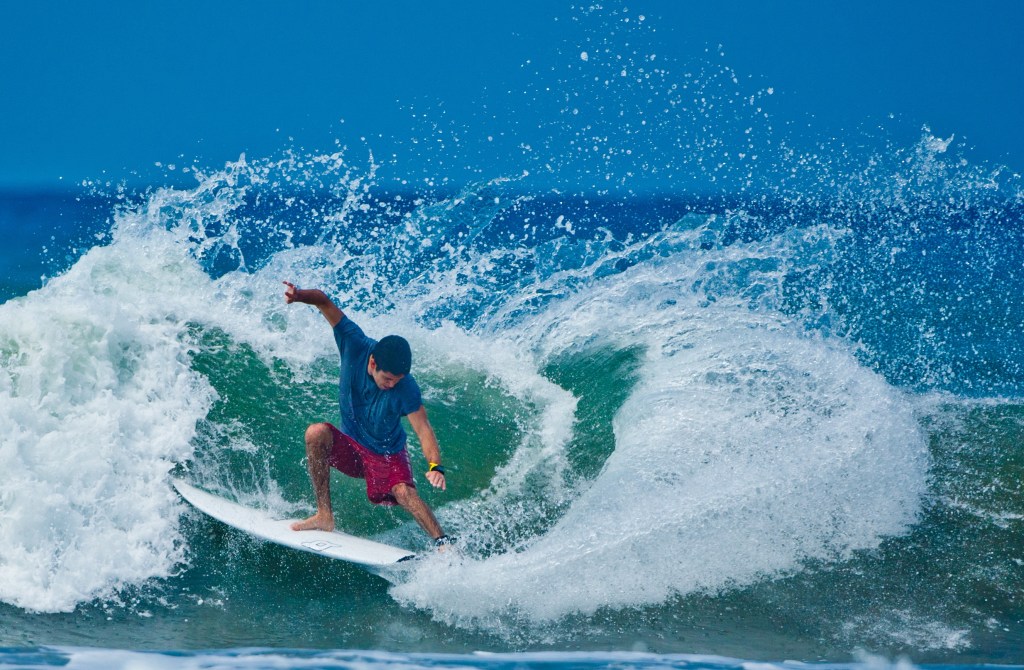
Surf photography depends upon so much more than time and location. The best results come to those that know the sport well enough to anticipate the surfer’s moves before they are executed so they are ready to capture critical moments on the wave. To me, there is little worse than seeing an image of a surfer doing nothing on a wave. Here are my thoughts on the matter:
Like any sport, surfing has specific moments that make for much more dynamic images than the lulls between them. Take baseball for example. It is much more dynamic to see Manny Machado in full swing with the ball leaving his bat than a photo of him walking out of the on-deck circle. Why would surfing be any different? It isn’t and there is nothing more boring than a picture of a surfer simply going down the line.
Of course, the ability to capture a critical shot is partially dependent on the skill set of your surfer. Do they prefer to go left or right? Do they like to do airs? Are they barrel dodgers or shack seekers? Once you understand their specific tendencies, you are ready to get in position to line up the perfect shot.
In general, every surfer takes off from the top of the wave, stands, does a bottom turn and then sets up for one or more critical moves – the moves that should be the subject of your shot.
The Bottom Turn: Speed and direction are set up by the bottom turn. The more the surfer pushes through the bottom turn, the more speed they will have as the address the face of the wave. A good bottom turn can be a fine photographic moment, especially with a hand drag or a sharp angle on the edge of the board. It is best to be positioned to the front of the surfer for such a shot to capture more than just their backside! From here, pay attention to their trajectory to determine the first critical move.
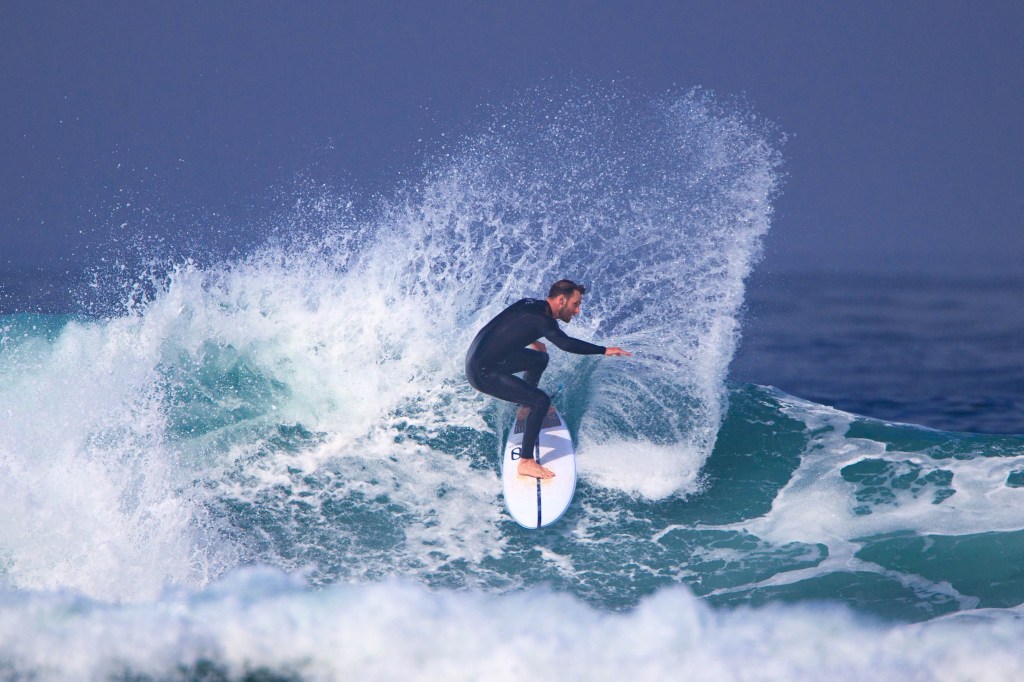
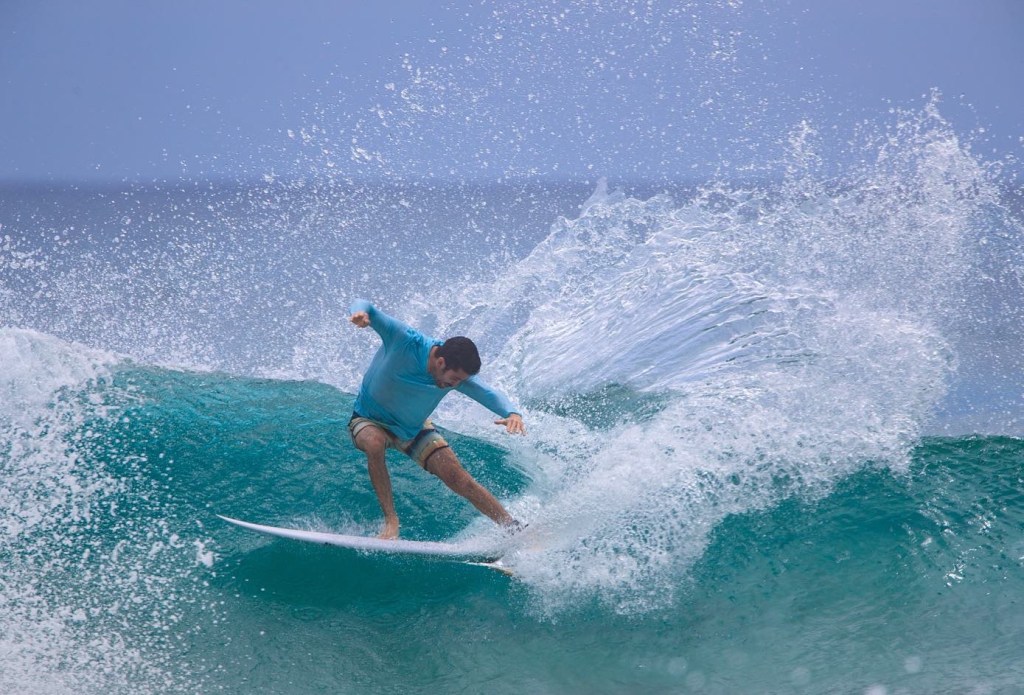
The Hack: Once the surfer shoots to the top of the wave, they have a number of choices. One is to aim the board at 12:00 straight up the wave and then at the top, whip the back of the board around 180 degrees so it is facing back down the wave. In the process, the tail of the board may fly out of the water with a huge spray shooting into the air: “throwing buckets.” There is essentially one moment where this all comes together and makes for awesome positioning and action for your image.
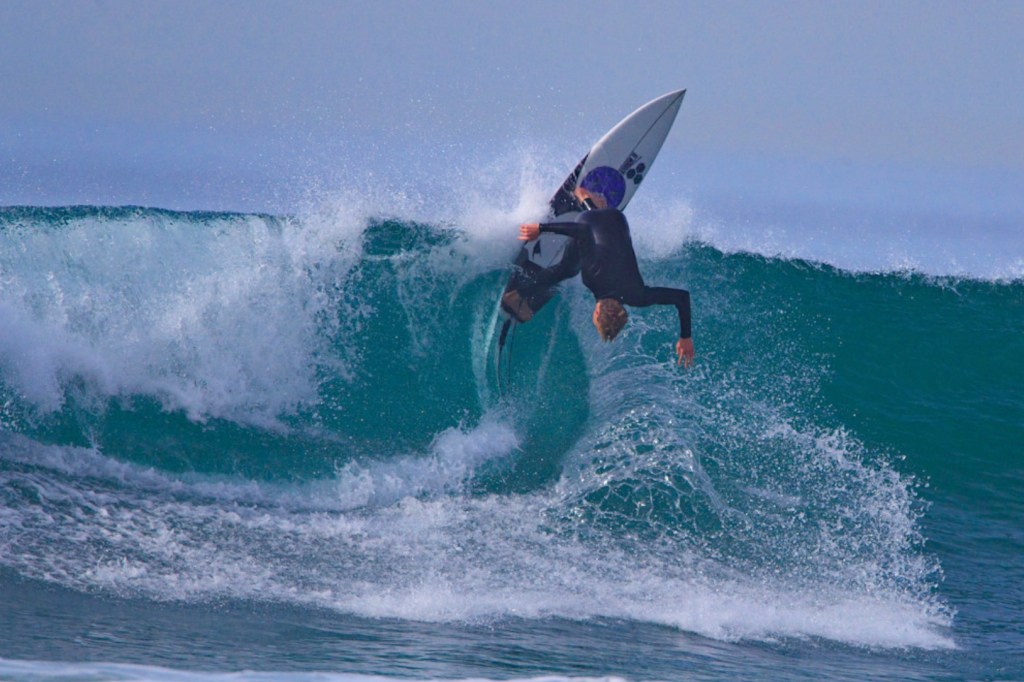
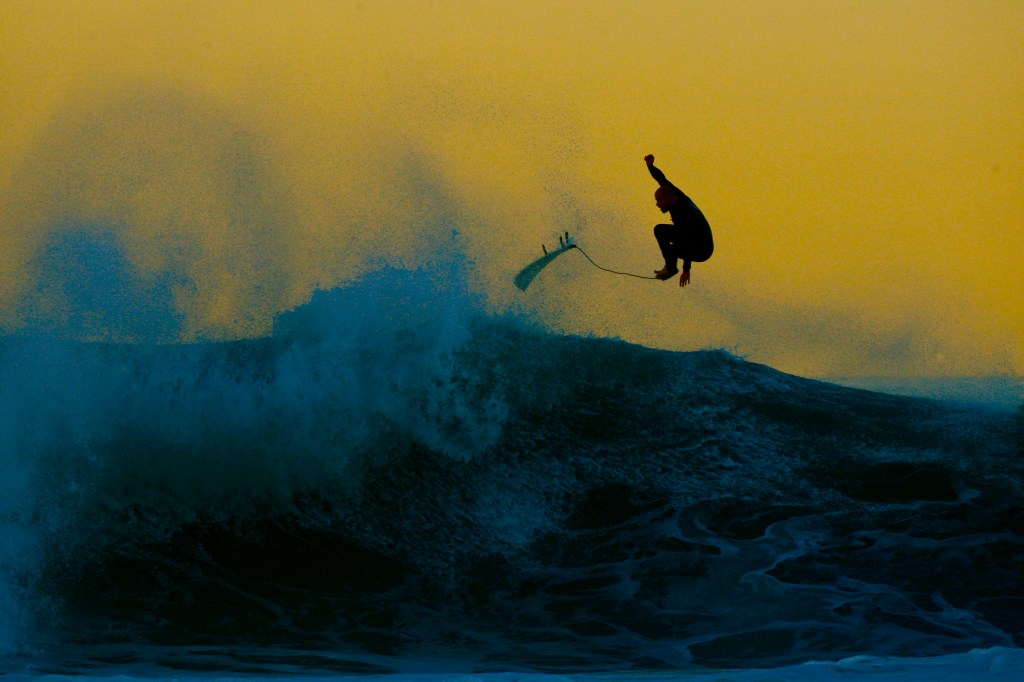
Aerials : Air shots are some of the best “wow” shots in surfing. This is where the surfer launches off the top of the wave into the air. From here the types of moves are endless and all offer a prime moment for the best images.

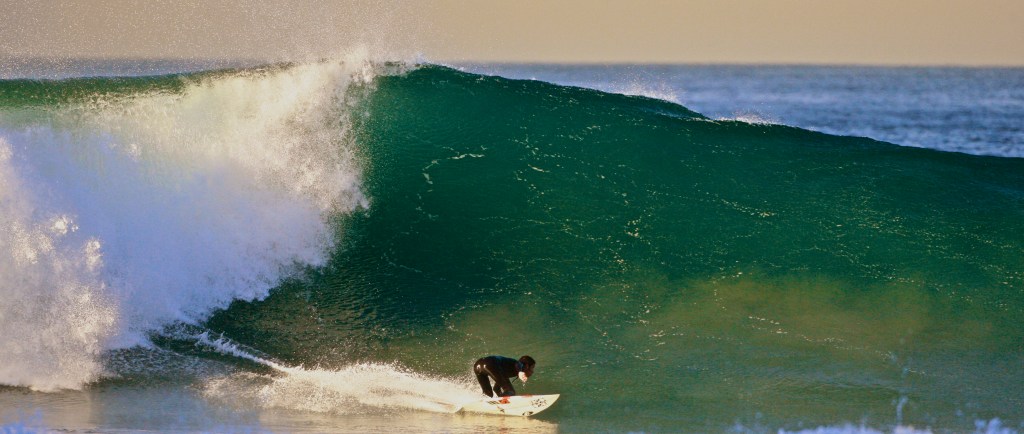
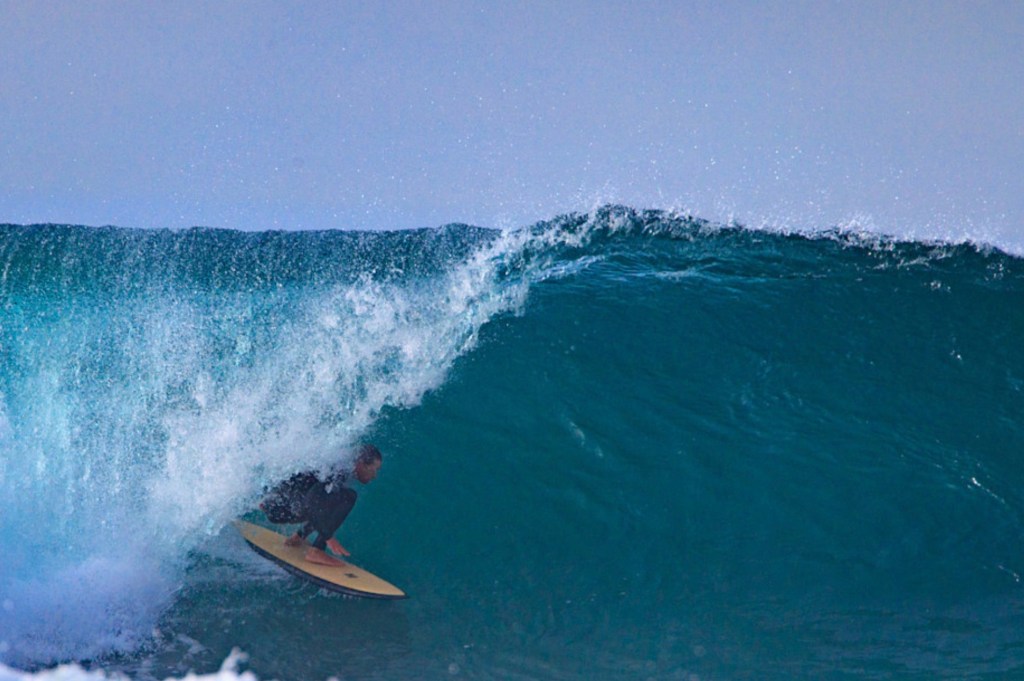
Getting Pitted: Depending on what the wave provides, your surfer may forego hitting the top of the wave and instead momentarily slow their board (“stall”) while heading parallel to the top, thus allowing the lip of the wave time to crest over the surfer: “getting barreled” or “shacked.” When shooting from shore, I like images where just the tip of the board and perhaps the front of the surfer’s face are peeking out from the barrel, thus giving dynamic proof of their presence in the “green room.” If the wave has enough power, look for the surfer to be “spit out” of the pit amidst a huge spray of water.
Carving: You can quickly assess a surfer’s skill level by their carving ability. A carve is generally a maneuver on the face of the wave where the edge of the board cuts into the water during a turn. Such turns might be a roundhouse, cutback, or 360 and allow the surfer to reposition for the next move. While these moves may be slightly slower than moves at the top of the wave, they generally allow of a series of potential images.
Bailing: Yes, there are times when a wave is closing out and there is nowhere to go for the surfer. Some will duck through the wave and others will shoot off the top in a bailout move. These make for some funny images, and if the surf is big enough, for some impactful ones. So be sure to keep your shutter going during such exits!
 Water Clicker Photo Blog