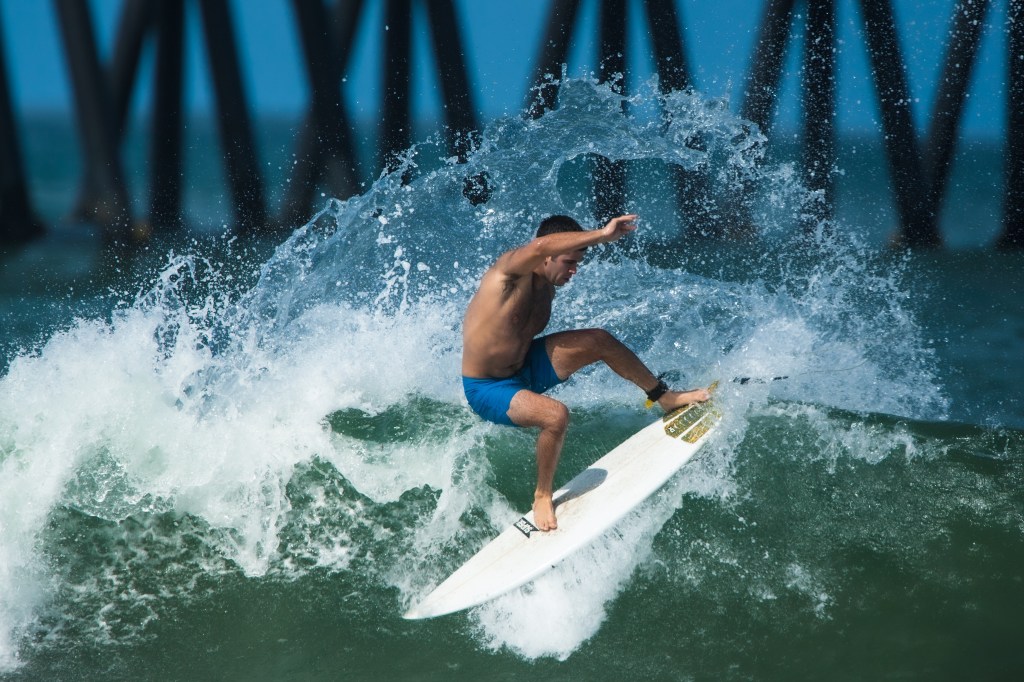
We have all seen dozens of surf shots, ranging from the out-of-focus speck on the horizon to crystal clear action in the massive barrels of Teahupoo. Guess which ones we are drawn to? Of course, its the full-framed action shots with color and clarity. Alas, we can’t always be in Tahiti during a killer swell. Instead, 90% of the time we are shooting at the local break with waves that are typically too small to fill the frame themselves. So what can we do to make those shots enticing?
If you take a moment and click through a series of local surf shots there a several things you will instantly identify with those images that draw your attention. Today, I am going to discuss one such detail, the background. A good background can compensate quite well for improving your photography even if you are working with a mediocre surfer. It can provide balance. It can provide a clue about location. It can create a question like: how was that captured? These are all attributes that will make your viewer linger over an image a bit longer.
Go down to the beach during any contest day and you may see several photographers capturing the action. Nine times out of ten, they will be sitting or standing directly in front of the surfer they are trying to capture. This gets them closest to the action, thus increasing the likelihood of a crisp shot that fills the screen. However, there may be better options to explore.
When I am working with a surfer, I like to discuss with them before the session where they like to surf best and whether they are goofy or regular. Sometimes this allows us to try a location that is just slightly different, but which includes the possibility of an interesting background.
The most obvious options are piers. Imperial Beach, Ocean Beach, Pacific Beach, and Oceanside all have beautiful piers with different characteristics. Second, consider locations with a jetty. These are scattered all up and down our coast and make for interesting geometry in the background. Of course, both piers and jetties cause the sand to collect and move in ways that often create excellent surf spots.
A less obvious, but no less wonderful scenario is to surf in locations where the coast makes a sweeping curve. Depending on the angle, this can lead to an interesting background. Imperial Beach, Coronado, Pacific Beach, Blacks, Swamis, and Oceanside are all examples.
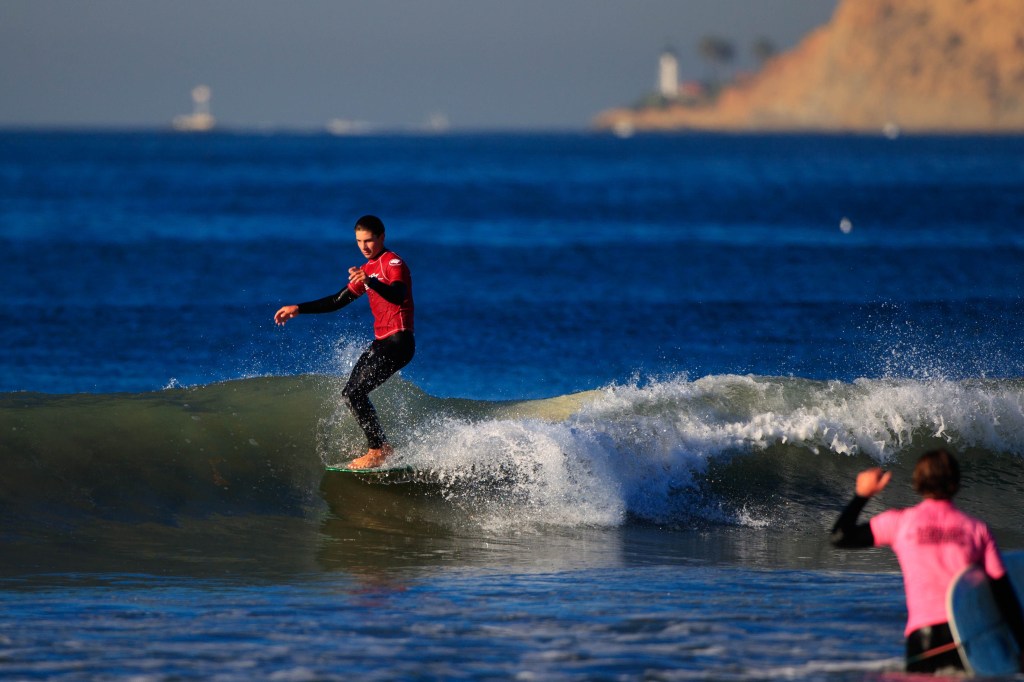
To best utilize and capture potential backgrounds, one is going to need a long lens. The longer the telephoto, the more the depth of field can be compressed. Take the above image as an example. The Pt. Loma lighthouse is approximately three miles from Shipwrecks. I captured this image with 700mm of glass to bring in the warm glow of the cliffs in the background. I also had to position myself about 300 yards south of the surfer to get the right angle. Fortunately for me, the sun was at my back and lighting up both the foreground and the background.
One of my favorite places to shoot is Blacks. Between the color of the water and the talent in the lineup, the chances of capturing some good images is quite high. I have found that if I line up in front of north peak and shoot south, the hills of La Jolla jut up in the background, making for a particularly interesting image. Depending on the level of morning fog, this can be either quite clear or almost ghostly. Again, a long lens is essential for this type of imagery.
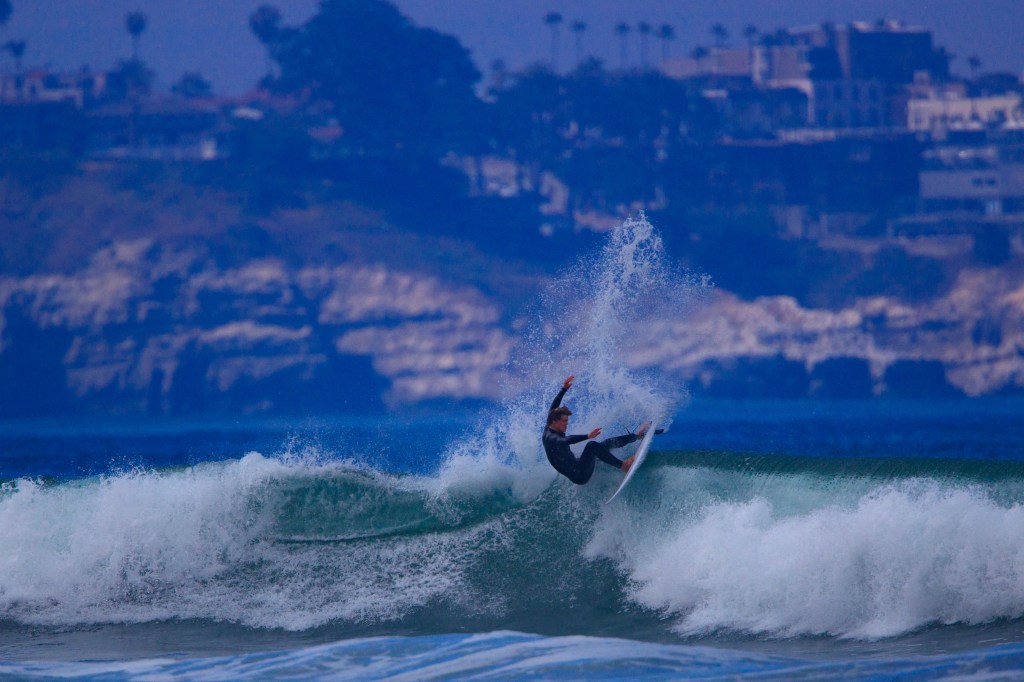
Whether you are working with a single surfer or just out to see what action you can capture, remember to look for potential backgrounds to enhance your surfing images. Positioning and a long lens are key. Fortunately for those of us living in Southern California, we have a plethora of excellent locations as well as an ocean of talent just waiting to be captured!
 Water Clicker Photo Blog