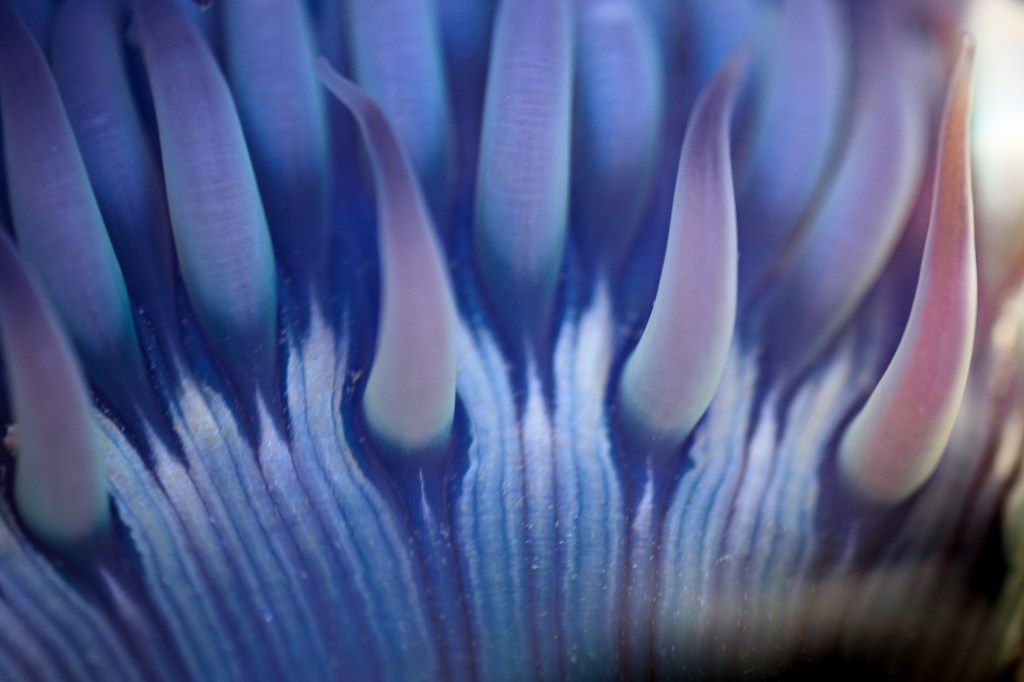
Remember those summer days as a kid when you raced down the sand at low tide to the closest jetty to see if there were any tide pools? The most magical things awaited our inquisitive minds. Maybe it was because our heads were barely three feet away from our toes, but tide pooling was an all-encompassing endeavor. Think about it; we were actually encouraged to stick out our little finger and touch things – a wonderful interlude to the persistent instruction of “don’t;” which seemed to play on repeat during my early summers.
Stuck along the edges of barely submerged rocks were little clumps of sea anenomes. Some of them were small, most of them were in clusters. Often they were closed up or covered with a smattering of small and broken shells carried in by the tide. But with a little more looking, you could always find one of the big ones that was still “open.” It’s symmetrical tentacles slowly moving with the pulse of the water. So what did we do as kids? Of course, we stuck our fingers in the middle and squealed with delight as the anemone lightly closed around our finger!
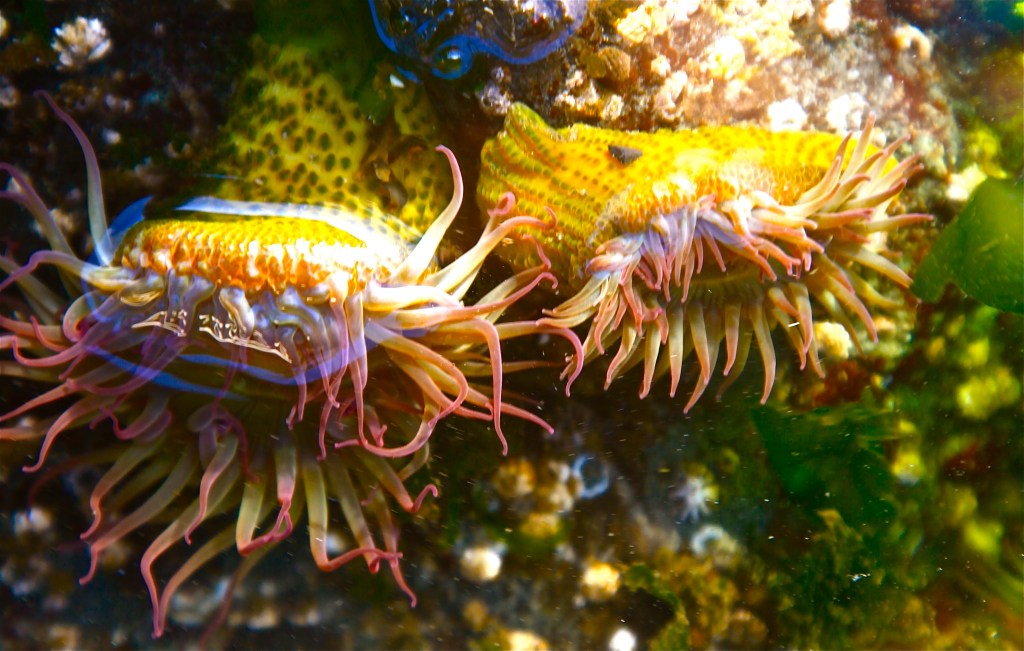
Well, some 50 years later and I confess I still love a good tide pool. While I no longer poke the poor critters, they still hold my fascination. Sea anemones are symmetrical wonders of nature. They are even more colorful than they seem when first viewing them through the glare of water. Removing the glare from a photo reveals a shocking array of colors and geometry. Every one seems to be slightly unique, which is pretty amazing considering there are literally thousands of anemone in any batch of tide pools.

Taking a photo of an anemone is surprisingly difficult. Manual focus is a must. Auto focus lenses will often pick up the surface of the water, leaving your intended subject matter out of focus. Similarly, you need to adjust your settings for the shadows to be sure to gather all the details. Then, of course, there is the requisite degree of balance as you stand on uneven, slippery rocks. Try this out, however, and before long you will realize you have returned to that blissful “kid” status where your world focus is once again about two inches in diameter!

So, next time you see low tide showing on the tide chart, grab the camera and head down to the water’s edge. Allow yourself a few moments to really start to see the details. I like to sit down and just stare at one spot for awhile. Before long, you will notice so many tiny creatures moving about that weren’t “visible” to you moments before. You will notice how they move with the gentle flow of the water around the rocks and how the little hermit crabs seem to appear out of nowhere. Anemones will begin to “open” and then the photographic magic begins!
 Water Clicker Photo Blog
Wow, these are beautiful!!
LikeLike
Thanks Lisa!
LikeLiked by 1 person